All-on-4 vs. All-on-X: Is There a Difference?
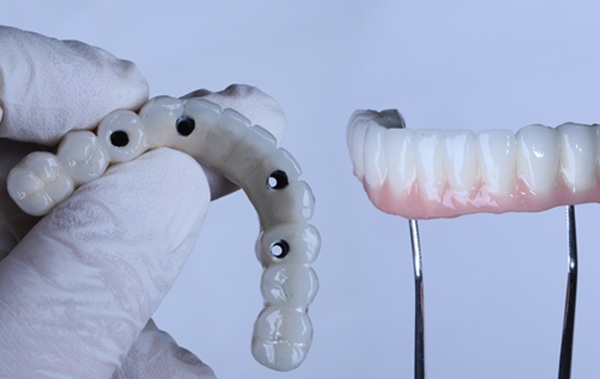
All-on-4® can help patients replace a full arch of missing teeth with a stable implant-supported restoration. Patients who explore full-arch tooth replacement may also hear the term All-on-X and wonder whether it means the same thing. Both options can restore chewing function, improve smile appearance, and create a more secure alternative to traditional removable dentures. The main difference comes down to the exact number of implants the dentist uses to support the full-arch restoration.
Understanding full-arch restorations with dental implants
A full-arch restoration replaces an entire upper or lower row of teeth. Instead of replacing each missing tooth with a separate implant, the dentist places a smaller number of implants in strategic locations. These implants then support a custom permanent denture that fills the full arch. Patients often report that this fixed full-arch restoration feels more stable than removable dentures because the implants anchor the replacement teeth to the jaw.
Another benefit is that dental implants help support the bone beneath the gums. When natural tooth roots no longer stimulate the jawbone, bone changes can occur over time. Implant-supported restorations can provide stimulation in the treatment area and help preserve the structure that supports the smile.
The specifics of the All-on-4 technique
As the term suggests, All-on-4 uses four dental implants to support a full arch of replacement teeth. A dentist typically places two implants near the front of the jaw and two implants toward the back. The back implants may sit at an angle to make the best use of available bone.
This angled placement can help some patients avoid bone grafting. It can also create a strong foundation for a temporary restoration while the implants heal. After healing, the dentist attaches the final restoration for long-term use.
In short, All-on-4 follows a specific treatment concept. It may work well for patients who have enough bone in the right areas to support the four-implant design. A dentist will evaluate the whole mouth (from the gums to the jaw) before recommending this option.
What is All-on-X?
All-on-X refers to a broader full-arch implant approach. The “X” stands for the number of implants the dentist chooses for the patient’s needs. That number may be four, five, six, or more, depending on the jawbone, bite, and treatment goals.
This flexibility allows the dentist to customize the plan. Some patients need more support because of jaw size, bone density, bite strength, or tooth replacement needs.
Which option may be right for your smile?
The goal of both treatments remains the same: to replace a full arch of teeth with an implant-supported restoration. Both options can improve comfort, appearance, and function. Both can also help patients avoid the slipping or shifting that may happen with traditional removable dentures.
A consultation gives the dentist the information needed to compare All-on-4 and All-on-X. The appointment may include X-rays, 3D scans, a gum health evaluation, and a review of the patient’s bite. Patients are encouraged to ask about the treatment timeline, healing process, temporary teeth, final restoration, and home care. All of this information can reveal whether a four-implant design or a customized approach may offer the best support.
Schedule a consultation today
All-on-4 and All-on-X are both effective ways to replace a full arch of missing teeth. The main difference comes down to whether the restoration uses a set four-implant approach or a customized number of implants. To learn more, call our office to schedule a consultation.
Request an appointment here: https://bronxfriendsdental.com or call Friends Family Dental & Braces at (646) 604-9936 for an appointment in our Bronx office.
Check out what others are saying about our dental services on Yelp: All-on-4 Dental Implants in Bronx, NY.
Related Posts
Finding an emergency dentist on short notice provides immense relief when sudden oral pain or an unexpected dental injury disrupts daily routines. From severe toothaches to infections, these abnormal symptoms warrant prompt professional attention to prevent further complications. Therefore, whether you maintain routine appointments or this is your first dental appointment in a while, our…
Whether you are scheduled for a dental procedure that requires sedation dentistry or are simply interested in learning more about it before your consultation visit, understanding what sedation dentistry is and the different types that are available is helpful. In essence, sedation dentistry is a way to minimize discomfort and help the patient relax during…
During routine checkups, general dentists often take the time to explain the difference between plaque and tartar. Both involve bacterial growth, but at different stages. Plaque is a soft film that can be easily removed by brushing, while tartar is a hardened deposit that adheres to the enamel like cement. Knowing more about these substances…
The right cosmetic dental services can treat any oral problem that impairs your smile. After a complete assessment, your general dentist can suggest specific treatments to target the issue. You can receive at least one procedure to improve your smile. The following are cosmetic dental services that can elevate your smile.The dentist will recommend a…